Polished Applications, Hollow Practices: The Credibility Crisis Quietly Threatening Global Award Programs
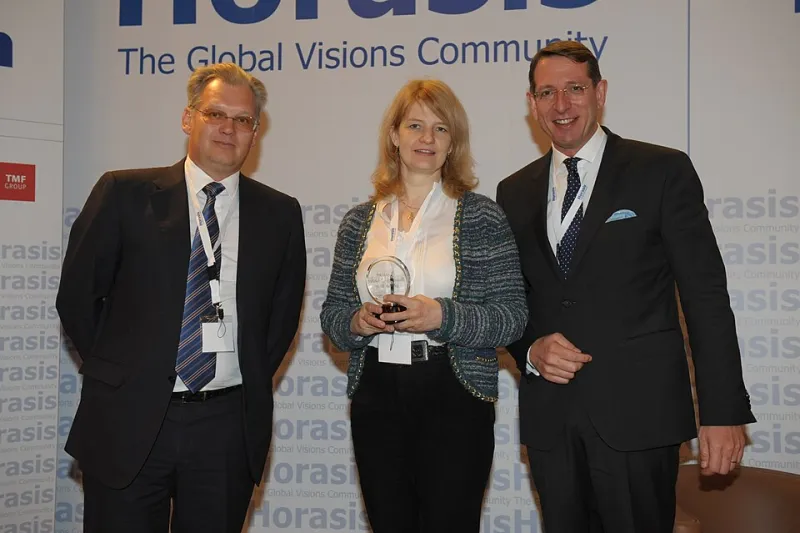
Photo: Unknown authorUnknown author, Public domain, via Wikimedia Commons
There is a particular kind of pride that fills a conference room when a company's name is announced at an international awards ceremony. Executives exchange handshakes. Communications teams draft press releases. The trophy finds a prominent home near the reception desk. What rarely makes it into the announcement, however, is the quieter story — the one about whether the award-winning initiative ever truly existed beyond the pages of a meticulously crafted submission.
This is the uncomfortable conversation that a growing number of judges, former applicants, and industry analysts are beginning to have in private. And increasingly, they are having it in public.
The Architecture of a Winning Application
Understanding how this problem develops requires understanding how most global award programs operate. Organizations submit detailed applications — often running dozens of pages — describing their practices, outcomes, and innovations. Judging panels, typically composed of industry veterans and subject-matter experts, evaluate those submissions against defined criteria. Site visits and third-party verification are sometimes part of the process, but they are far from universal.
This structure, while reasonable in design, creates a predictable vulnerability. Companies that invest heavily in the application process — hiring consultants, commissioning internal audits, and framing outcomes in the most favorable possible light — can produce documentation that reads as genuinely transformative even when the underlying practice is nascent, inconsistent, or, in the most troubling cases, largely aspirational.
"There is an entire cottage industry built around helping organizations win awards," said one former judge for a prominent European-based business excellence program, speaking on condition of anonymity. "Some of those consultants are legitimate. They help good companies tell their stories more clearly. But others are essentially teaching clients how to describe a future state as if it were a present reality."
Which Industries Are Most Vulnerable
The phenomenon is not evenly distributed. Certain sectors appear more susceptible than others, largely because their award criteria involve outcomes that are inherently difficult to measure or verify within the timeline of a typical judging cycle.
Environmental, social, and governance (ESG) categories are frequently cited as particularly prone to this dynamic. Carbon neutrality claims, supply chain ethics certifications, and community investment metrics all depend on data that applicants largely self-report. Without mandatory third-party audits, judges are evaluating the quality of storytelling as much as the quality of practice.
Workforce culture and diversity recognition programs face similar challenges. An organization can demonstrate impressive demographic statistics at the application stage while quietly experiencing significant attrition among underrepresented employees, a trend that may not surface in award criteria for another fiscal year, if at all.
Innovation categories carry their own version of the problem. A product or process described as commercially deployed may, in practice, exist only as a pilot program serving a fraction of the customer base. The distinction rarely appears in the application narrative.
The Judges Who Are Paying Attention
To be clear, many global award programs are run with rigorous integrity, and many judges approach their responsibilities with a sharp critical eye. The issue is not that recognition programs are broadly corrupt — it is that even well-designed programs have structural limitations that sophisticated applicants can exploit.
Several judges interviewed for this article described developing informal heuristics over time to identify applications that feel more performed than genuine. Inconsistencies between quantitative claims and qualitative descriptions raise flags. So does language that closely mirrors the award criteria themselves — a sign that the application may have been reverse-engineered from the judging rubric rather than drawn from authentic organizational experience.
"The applications that concern me most are the perfect ones," said a veteran judge who has evaluated submissions across multiple global programs. "Real excellence is messy. It involves setbacks and pivots and honest acknowledgment of what didn't work. When every data point is pristine and every narrative arc resolves cleanly, I start asking harder questions."
Some programs have responded by introducing post-award monitoring, requiring winners to submit follow-up reports demonstrating continued progress. Others have expanded their use of independent verification firms. These are meaningful steps, though implementation remains inconsistent across the industry.
The Cost to Credibility — and to Legitimate Winners
For organizations that do the difficult, unglamorous work of genuinely transforming their operations, the stakes of this credibility gap are significant. When a competitor wins the same recognition for a practice that exists primarily on paper, it dilutes the signal value of the award for everyone who earned it honestly.
This matters in practical terms. U.S. companies increasingly use international award recognition as a recruiting tool, a client acquisition asset, and a signal to investors. If the market begins to discount those signals — and evidence suggests sophisticated observers already are — the competitive value of legitimate recognition erodes alongside the fraudulent variety.
There is also a leadership accountability dimension that deserves attention. Senior executives who authorize award applications for initiatives that are not yet operational are making a choice with real ethical weight. They are asking their organizations to claim credit they have not yet earned, and they are doing so in forums designed to celebrate the best practices in their industries.
What Responsible Programs — and Leaders — Should Do
The solution is not to abandon global recognition programs. At their best, they serve a genuinely valuable function: surfacing innovation, establishing benchmarks, and creating a community of practice around the highest standards in any given field. The solution is to make them harder to game.
For award administrators, that means investing in verification infrastructure, even when it is expensive and logistically complex. It means designing criteria that require evidence of sustained outcomes rather than point-in-time snapshots. It means creating consequences — including rescinding awards — when post-recognition audits reveal material misrepresentation.
For organizational leaders, particularly those at U.S. companies navigating the global awards circuit, the imperative is simpler and more demanding: only submit for recognition you have genuinely earned. Not recognition you intend to earn. Not recognition you are in the process of earning. Recognition that reflects what your organization actually does, consistently, at scale.
The trophy on the reception desk should be a record of achievement, not a declaration of intent. The distinction is not merely semantic. It is the difference between a culture that pursues excellence and one that pursues the appearance of it — and over time, those two cultures produce very different organizations.
Global recognition, when it functions as intended, is one of the most powerful tools available for elevating standards across industries and borders. Protecting that function is not the responsibility of judging panels alone. It belongs to every leader who decides what their organization's name should stand for.